Wednesday, 1 June 2022

Why scientists are 'weeding' coral reefs

Why scientists are 'weeding' coral reefs

Climate change is threatening the world’s corals, but removing seaweed—like weeding a garden—can give some reefs a boost.

Continue reading...

A New Quantum Technique Could Change How We Study The Universe

A New Quantum Technique Could Change How We Study The Universe

Astronomy is undergoing a revolution. In fact, you might argue there are a number of them. Exoplanet research has progressed significantly in the last ten years, gravitational wave astronomy has developed as a new area, and the first photographs of supermassive black holes (SMBHs) have been taken.

Continue reading...

Did NASA find Hell? Scientists brace for first glimpse of world that constantly burns

Did NASA find Hell? Scientists brace for first glimpse of world that constantly burns

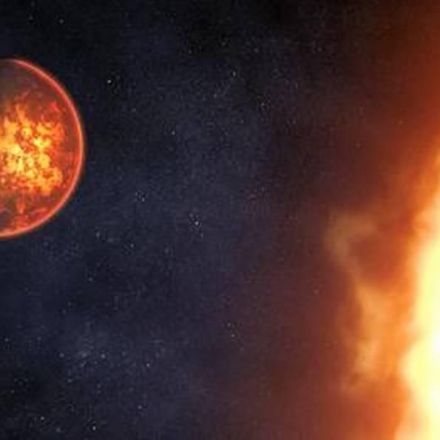
“Oceans boil away, rocks begin to melt, and the clouds rain lava.”

Continue reading...

Astronomers identify 116,000 new variable stars

Astronomers identify 116,000 new variable stars

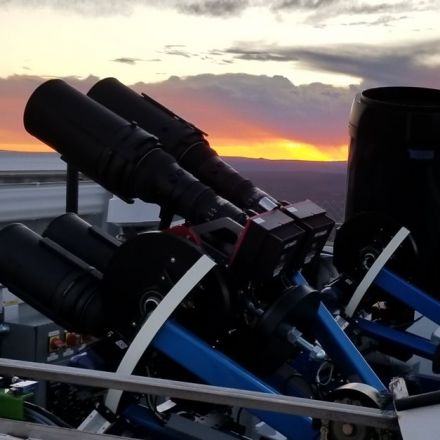
Ohio State University astronomers have identified about 116,000 new variable stars, according to a new paper. These heavenly bodies were found by The All-Sky Automated Survey for Supernovae (ASAS-SN), a network of 20 telescopes around the world which can observe the entire sky about 50,000 times deeper than the human eye. Researchers from Ohio State have operated the project for nearly a decade.

Continue reading...

Too much self-confidence can endanger health

Too much self-confidence can endanger health

Older people who overestimate their health go to the doctor less often. This can have serious consequences for their health, for example, when illnesses are detected too late. By contrast, people who think they are sicker than they actually are visit the doctor more often. This is what a new study by Sonja Spitzer from the Institute for Demography at the University of Vienna and Mujaheed Shaikh from the Hertie School in Berlin found based on data from over 80,000 Europeans aged 50 and older.

Continue reading...

Astronomers demonstrate how using the cloud can rev up the rate of discovery for asteroids

Astronomers demonstrate how using the cloud can rev up the rate of discovery for asteroids

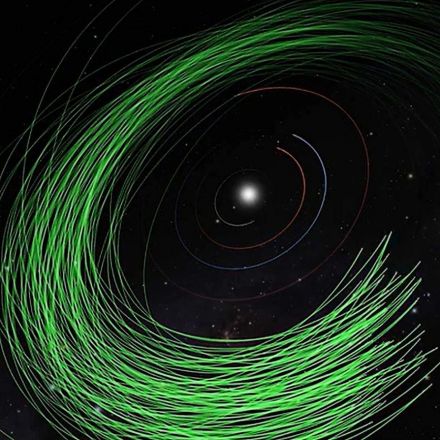
Astronomers have used a cloud-based technique pioneered at the University of Washington to identify and track asteroids in bunches of a hundred or more. Their achievement could dramatically accelerate the quest to find potentially threatening space rocks.

Continue reading...